Open TikTok, Instagram, or YouTube Shorts and you’ll see how accessible video creation has become.
Anyone can trim footage, add music, generate captions, apply effects and export a polished video in minutes.
AI has pushed this even further. We can now generate images, create video from prompts, animate stills and produce shots that once required an entire production team.
But there is a difference between making a video and editing a video.
Trimming clips is a technical process.
Editing is about creating meaning.
And one of the simplest demonstrations of this idea came from Soviet filmmaker and film theorist Lev Kuleshov.

Lev Kuleshov. Image from Wikipedia. https://en.wikipedia.org/wiki/Lev_Kuleshov
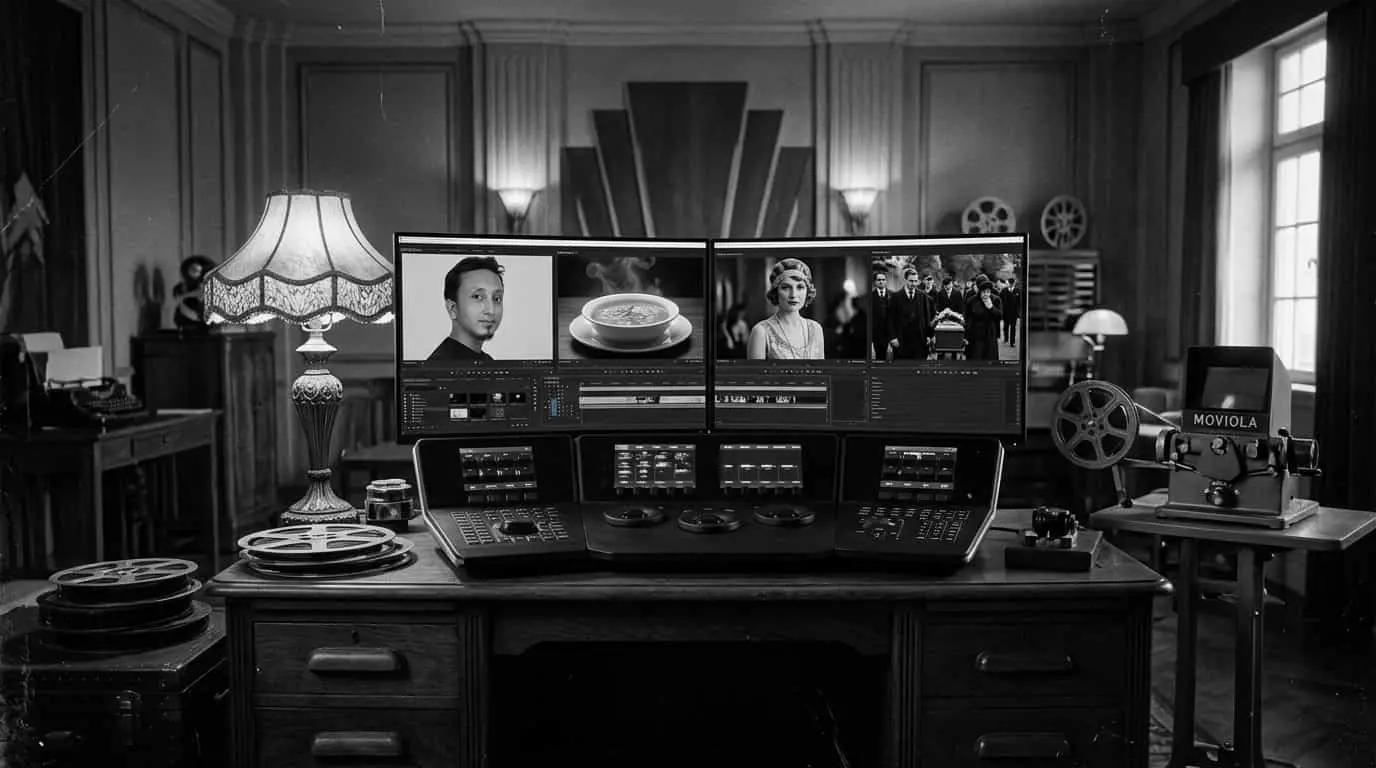
The Same Face. A Different Meaning.

The idea is simple.
Take the same neutral facial expression and place it next to different images.
Face + soup.
The audience may see hunger.
Face + grief.
The audience may see sadness.
Face + woman.
The audience may see attraction.
The actor hasn’t changed.
The context has.
The audience creates the meaning.
That is the Kuleshov Effect.
And that is one of the fundamental principles of editing.
Editing Is More Than Making Things Move

Today, editing is often associated with speed.
Fast cuts.
Zooms.
Transitions.
Kinetic captions.
Sound effects.
Pattern interrupts.
These techniques can be effective.
But movement does not automatically create meaning.
A video can cut every second and still have nothing to say.
The better question is not:
“How much can I put on screen?”
It is:
“What does this cut make the audience feel, understand or assume?”
That is where editing becomes more than technique.
The Kuleshov Effect Is Everywhere

You don’t need to study classic cinema to see the Kuleshov Effect.
It is everywhere in advertising.
An athlete looks.
Cut to running shoes.
Suddenly the shoes represent determination.
A family looks.
Cut to a beautiful home.
The home represents comfort and belonging.
A person looks into the distance.
Cut to an open road.
The car becomes freedom.
The product isn’t creating all of those emotions by itself.
The edit creates the association.
AI Can Generate the Shot. But Who Creates the Meaning?

This becomes even more relevant with AI.
AI can generate the shot.
It can create the person, the environment, the camera movement and almost anything else you can imagine.
But it still doesn’t answer the most important question:
What comes next?
A person looks off-screen.
Do we show a beautiful landscape?
A loved one?
A product?
An empty chair?
A disaster?
Each choice changes the meaning.
AI can generate the image.
Editing determines the relationship.
And the relationship creates meaning.
The Editor Still Matters

Technology has made creating images easier.
AI has made generating video easier.
Editing software has become more powerful than ever.
But none of these tools automatically understands why one image should follow another.
That is still an editorial decision.
So the next time you sit at a timeline, don’t only ask:
“Does this look good?”
Ask:
“What does this cut make the audience feel, understand or assume?”
Because editing isn’t simply about moving clips around.
It is about controlling the relationship between them.
AI can generate the shot.
Software can execute the cut.
But the editor decides what it means.